How Background Music Changes Meaning with Context
Background music changes meaning with context. Learn to hear how dialogue, room tone and cue timing shape a scene, and decide what the score should leave unsaid.
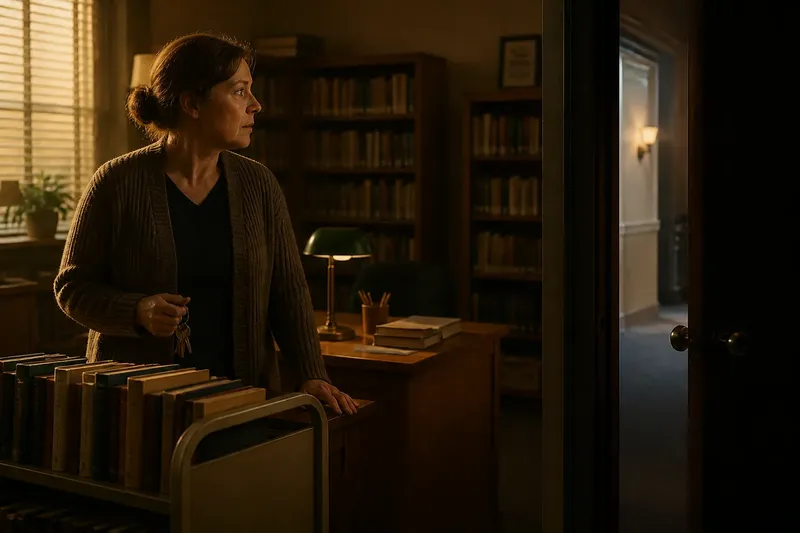
A low cello note sounds beneath a child holding a paper boat. The note could suggest tenderness, grief or suspense, but the background music takes its meaning from the scene around it: the child’s expression, the room’s quiet and what has just happened.
For viewers and editors, that makes a more useful question than “What does this cue mean?” Ask what the music contributes here. It may colour a silence, make a gesture feel deliberate or draw attention away from a sound the scene needs us to hear.
Listen for the layers
A soundtrack is not just music beneath an image. It can include dialogue, room tone, footsteps, traffic, cloth moving and the small sounds of objects being handled. The score shares space with all of them, so its role is partly a matter of what it leaves audible.
Try listening once for the music’s shape: its pace, changes in volume, recurring notes and moments of silence. On another pass, follow the other sounds. A sustained chord may feel intimate when a room’s faint hum remains present; the same chord can seem imposing if it swallows that detail.
Instrument names and mood labels can be useful shorthand in editing notes, but they are poor substitutes for describing what happens. “The strings rise as the door opens” is more precise than “sad music”. It records a relationship the sequence actually gives the viewer.
Space for dialogue
When words carry a decision or a warning, music can make them harder to follow without sounding conspicuously loud. The problem may be a busy arrangement, a swell at the wrong moment or a sustained note that occupies the same expressive space as a voice.
Listen to the dialogue with the score in place, then compare it with the score lowered or muted. If a key word becomes clearer, consider reducing the music or changing where it thickens. If the words remain clear but the scene loses its intended tension, a smaller adjustment may serve better than removing the cue.
Room tone also matters. A completely clean pause can feel unlike the space established by the surrounding scene. Leaving a quiet hum, distant traffic or soft ventilation beneath a break in the score can preserve the sense of a place without filling the pause with music.
Timing and silence
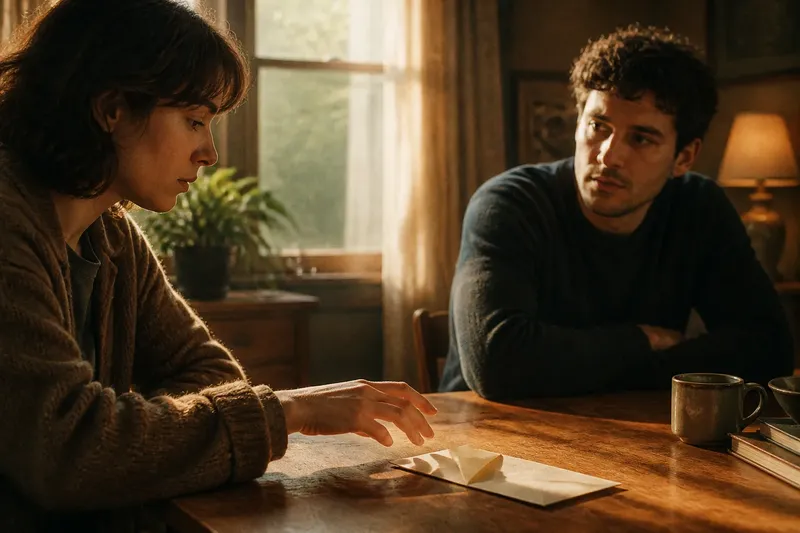
A cue’s entrance can change what it seems to comment on. Music beginning before a character opens a letter may build expectation; beginning after the character’s face changes can feel like a response to that reaction. The shots before and after the cue are part of its meaning.
Silence is not simply the absence of sound. A score that stops may expose a breath, a chair shifting or the faint scrape of paper. If that detail matters, the pause can draw attention to it. If the scene needs continuity instead, leaving a restrained bed of music may feel more coherent.
When revising, listen to the entire passage rather than judging a musical fragment alone. A phrase that seems heavy in isolation might sit naturally after a long quiet stretch; one that sounds neutral on its own could become pointed when it returns beside a familiar image.
When does music distract?
How can music compete with dialogue?
Listen for words that become indistinct when the score swells or grows dense. If a line is harder to follow, try lowering the cue or simplifying it beneath that passage; if the words remain clear, preserve the sound that supports the scene’s tone.
Should every pause have music?
No. A pause may be more revealing when room tone or a small physical sound remains on its own. If that makes the setting feel empty in a way the scene does not intend, a quiet musical bed may suit it better.
Does a minor key always sound sad?
No. A minor-key passage can contribute to several impressions, depending on its rhythm, arrangement and the other sounds around it. Treat the key as one feature of the cue, not a fixed instruction to the viewer.
How do I judge a cue’s role?
Describe what it does at the moment it enters, changes or stops. If that description depends on a particular image, line or sound, the cue is working through context rather than carrying a single meaning on its own.
Check the sound mix
- Check whether every spoken word remains clear; if a key line is masked, lower or thin the music there, and if it is already clear, leave the dialogue balance alone.
- Check whether a meaningful sound, such as a key turning or paper tearing, can still be heard; if it disappears, reduce the competing cue or move its swell, and if it remains distinct, keep the existing balance.
- Check whether room tone continues through a musical pause; if the space suddenly feels unnaturally blank, retain some ambient sound, and if the pause feels intentional, do not add a new layer.
- Check whether the cue begins before or after the action it seems to comment on; if its entrance explains too much, delay it, and if the early entrance builds useful expectation, keep it in place.
- Check whether the cue’s ending leaves a sound exposed; if the resulting silence distracts from the scene, let the music or ambience continue, and if the exposed detail sharpens the moment, preserve the break.
- Check whether a recurring musical phrase returns beside a different image; if the new pairing creates a useful contrast, retain the return, and if it muddies the scene’s intent, alter the placement or omit it.
A cue in context
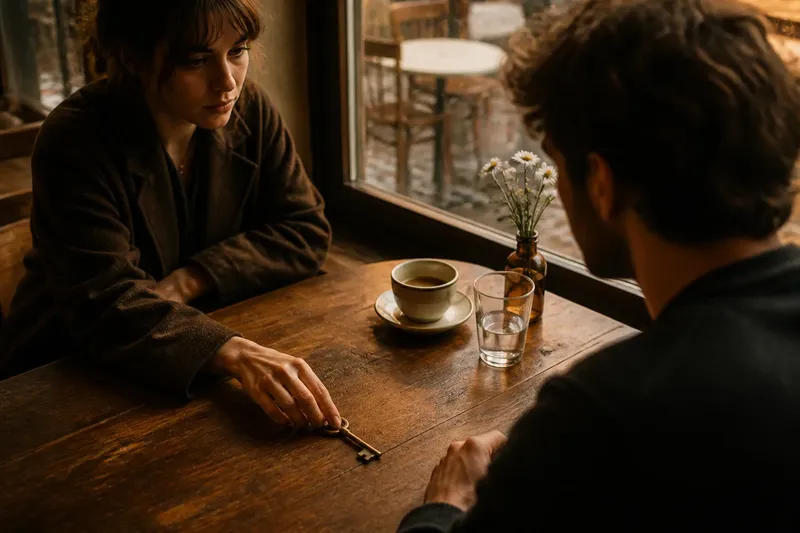
Say you are editing an invented scene in which a person slides a key across a café table. The starting materials are a visible but unreadable expression, a short spoken line, faint café room tone and a warm musical phrase that begins as the key moves. To keep the exchange unresolved, you move the phrase until after the line, lower it beneath the words and leave the room tone audible when the phrase ends. The resulting edit gives the dialogue and gesture space before the music enters; the unresolved ending remains audible, while the listener can still hear the café around it. If the intended effect were welcome rather than uncertainty, the same phrase could begin with the gesture instead, accepting that it would frame the exchange more warmly.
Leave some ambiguity
It is not worth assigning every instrument a fixed emotion or matching each shot to a named mood. Those labels can help an editor communicate a temporary intention, but they become restrictive when treated as rules about what viewers must feel.
Background music changes meaning with context: listen for what the score shares with dialogue, room tone and physical detail, then notice where it enters and what remains when it stops. That is often enough to decide whether a cue should lead the moment, stay discreet or leave the soundscape to speak for itself.